Diamond Setting: How Stones Are Secured in Jewellery
Diamond setting is the skilled work of fitting a stone into jewellery and securing it with metal. A good result balances support, alignment, a neat finish and the intended view of the diamond. The setting must suit the individual stone as well as the design.
Reviewed by Adnan Ali, Graduate, GIA Diamond Grading · Updated 2026-10-21
What is diamond setting?
“Setting” can mean the metal structure that holds a diamond or the work of fitting the diamond into it. A prong setting uses individual metal supports; a bezel uses a surrounding rim; channel and bead-set designs arrange smaller stones differently. This guide explains the making process. Our setting-types guide compares the styles you can choose.
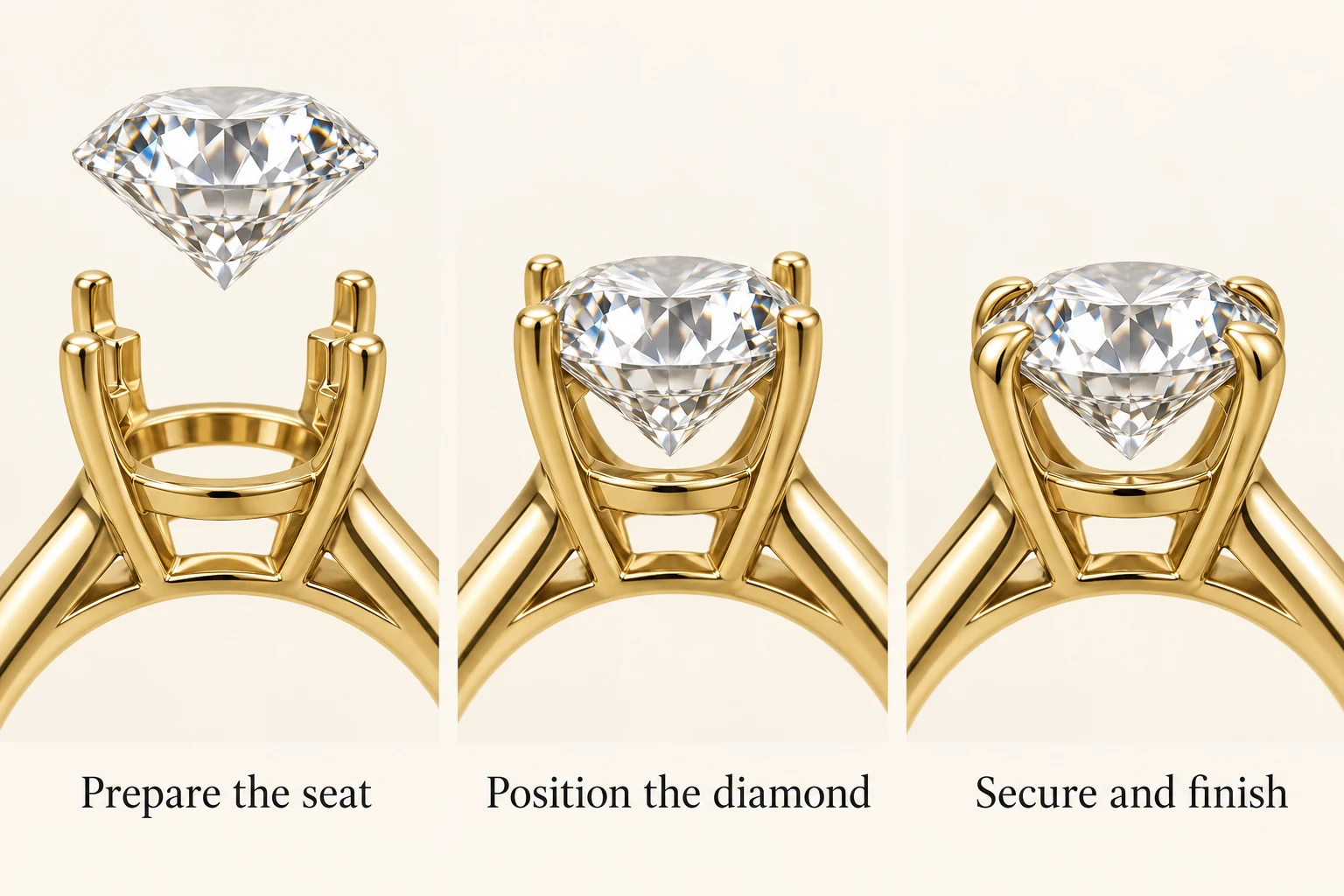
How is a diamond set into a ring?
- 1. Assess the pairing. The setter considers the stone’s actual outline and dimensions alongside the intended mounting.
- 2. Prepare its support. In a prong setting, small seats or bearings receive the diamond around its girdle, the edge between its upper and lower parts.
- 3. Position the stone. It is seated in the intended orientation and checked for level and fit.
- 4. Secure it with metal. Prong tips, a rim or other retaining features are carefully formed according to the style.
- 5. Refine the detail. The retaining metal is shaped and finished so it looks neat and suits the design.
- 6. Inspect the result. Support, contact and alignment matter alongside the appearance of the finished setting.
Some mountings have seats started in advance; others need them prepared individually. A seat is part of the support, not an empty decorative notch. The diamond and setting still need to be a suitable pairing.
Sources: Stuller: what pre-notched settings and seats mean
What are the main challenges in diamond setting?
| Challenge | Why it matters | What careful setting aims to achieve |
|---|---|---|
| An accurate seat | Gaps can allow movement; removing too much metal can weaken a support. | A close fit with sufficient supporting metal retained. |
| Level and orientation | An uneven position can disturb the intended appearance. | A deliberate, balanced arrangement suited to the design. |
| Fine retaining details | Tiny tips must do a structural job as well as look elegant. | Neat, consistent contact without unnecessary bulk. |
| Vulnerable points | Sharp corners and pointed ends need particular consideration. | Suitable support and protection for the stone’s shape. |
| Rows of small diamonds | Repeated elements make differences in spacing or alignment noticeable. | An orderly overall pattern with attention to each stone. |
Sources: GIA: workmanship checks for prong settings
Diamonds resist scratching, but they can still chip. Pointed shapes and thin edges require care. This is why a setting should suit the actual stone; simply making every claw smaller is not a universal improvement.
Sources: GIA: protecting diamonds from chipping
How does Xclusive Diamonds approach diamond setting?
In the Xclusive Diamonds making process, stones are set one at a time under magnification: seated, levelled and secured by hand. This follows the filing and truing of the casting, so setting is a distinct stage of making the piece.
Individual attention allows the maker to work on each stone’s position while keeping the whole design in view. A solitaire needs a balanced centre; a row of diamonds needs a pleasing rhythm. The finishing stage then refines the surfaces, and the finished piece is checked against the order before dispatch.
The result should be enjoyable from more than one angle: the diamond arrangement from above, the setting’s profile from the side, and the way the complete piece sits when worn. Our Craftsmanship page explains this emphasis on balance and wearability.
Is one setting style always more secure?
No style name alone guarantees security. The design, suitability for the stone, workmanship and condition all matter. Choose the appearance you enjoy, then ask how that particular setting supports the diamond and fits your everyday activities.
Are diamonds held in place with glue?
In conventional prong, bezel, channel and bead-set diamond jewellery, the metal provides the retention. A visible setting should not be assumed secure merely because the stone appears to stay in place. If you suspect movement, have it checked rather than adding adhesive.
Can a larger diamond fit the same setting?
Sometimes a change is possible, but carat weight alone cannot establish fit. A larger or differently proportioned stone may require another head or a redesigned setting. Ask for an assessment before buying a replacement stone or assuming an existing ring can take it.
What can I check when my jewellery arrives?
- Compare the overall arrangement with your order and the design you chose.
- Look from above and the side: are the stones positioned as intended?
- Notice whether a tip catches during normal handling; do not force fabric against the setting as a test.
- Do not push, twist or tap diamonds to test their security yourself.
- If you notice movement, a bent claw or persistent catching, stop wearing the piece and contact us.
Does a new setting need care over time?
Yes. Everyday knocks and wear can change a setting’s condition. Arrange a professional check if something feels different or after a significant impact. A setting that was well made still benefits from appropriate care throughout its life.
Sources: GIA: caring for and protecting a diamond ring
Questions to ask before choosing a setting
- How does this setting suit my chosen diamond shape?
- How much of the stone will the retaining metal cover?
- Can I see the side profile as well as the top view?
- How should I care for the setting, and when should I have it checked?