Diamond Settings: Choose a Style for Everyday Wear
See the main setting styles and compare their appearance, comfort, protection and care before choosing your ring.

Reviewed by Adnan Ali, Graduate, GIA Diamond Grading · Updated 2026-10-18
A setting is the metal that holds the diamonds. It affects how much of each stone you see, the outline of the ring and how it feels in daily wear. Start with the look you like, then consider comfort, height and maintenance.
Solitaire prong shapes
These four examples compare the visible tips that hold a solitaire diamond. Each illustration uses four matching prongs so you can see the difference in shape; some designs use six. A solitaire can also use a bezel, so these are prong-tip choices rather than every possible solitaire setting.
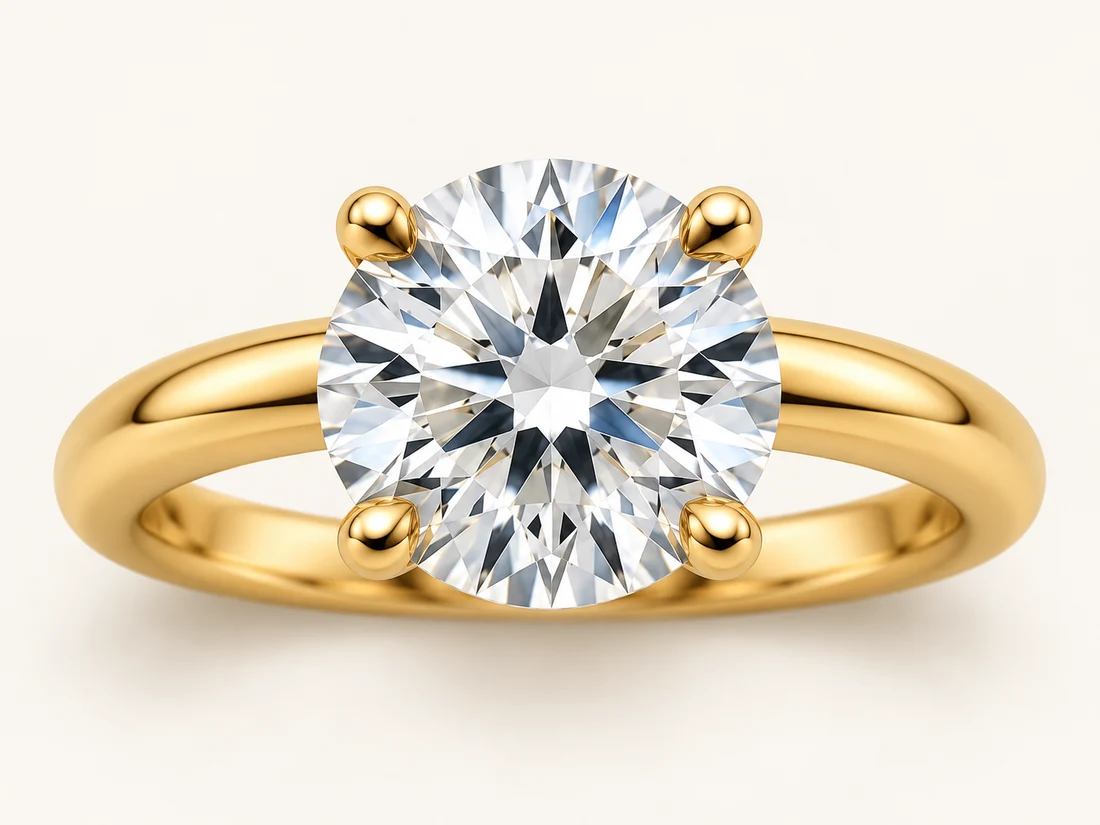
Round prongs
Rounded tips give the diamond a softer, classic outline.
Consider: You see a small dot of metal at each tip. Compare the actual tip size on the ring you choose.
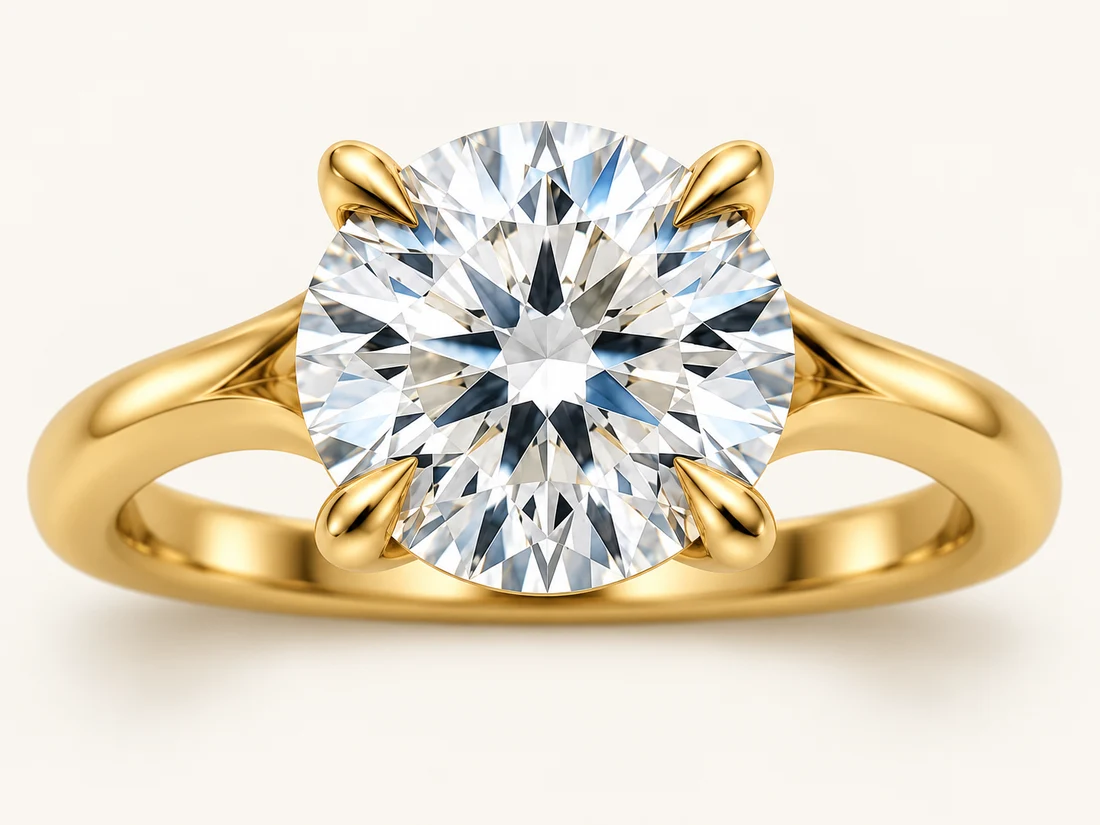
Claw prongs
Tapered tips curve over the edge of the diamond for a more pointed, defined look.
Consider: Check that the tips sit smoothly against the stone. The visible size of a claw varies between designs.
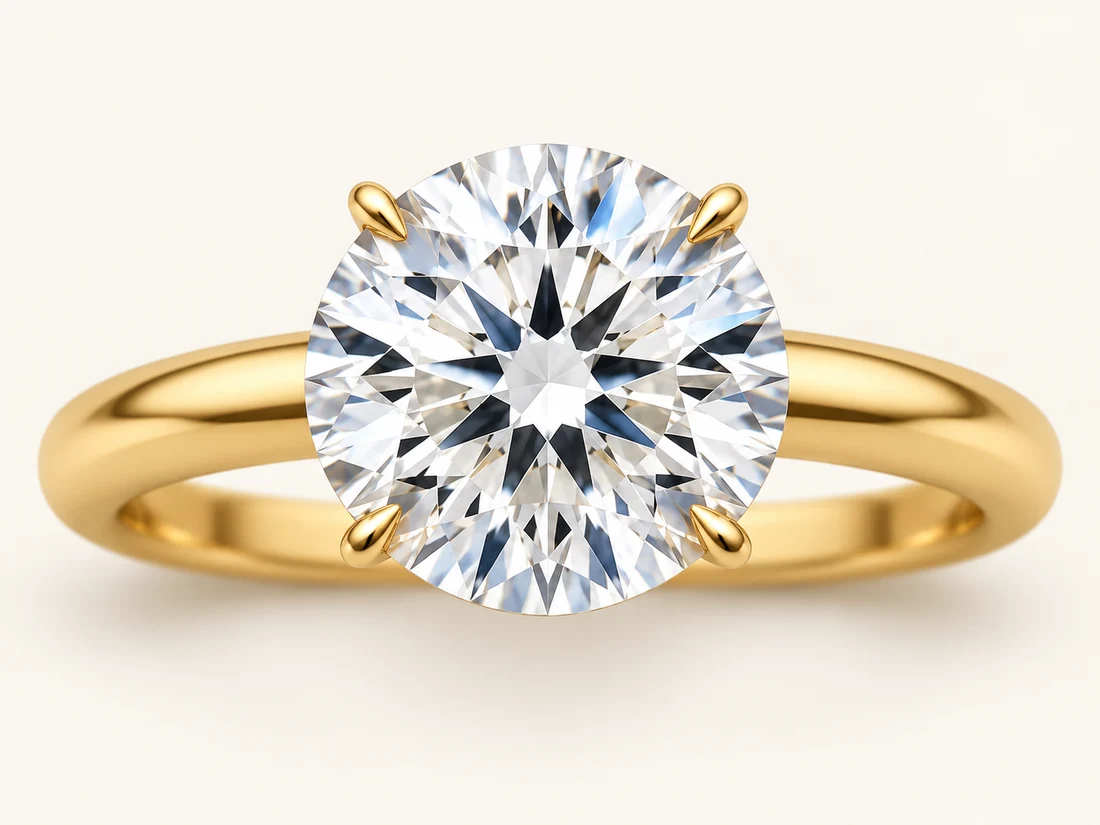
Petite claw prongs
Smaller, finer claw tips give a delicate appearance with less metal visible over the diamond.
Consider: Fine prongs still need appropriate care and regular checks. Choose the actual design rather than the label alone.
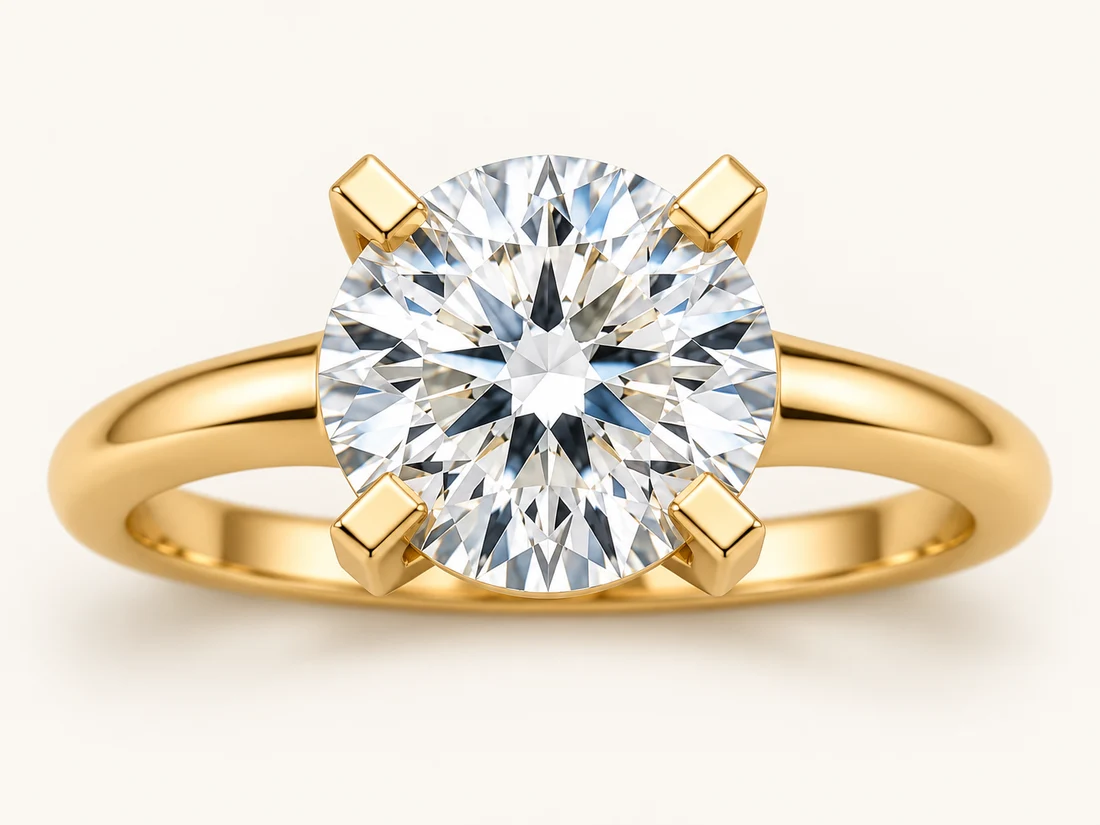
Tab prongs
Flat, rectangular tips create a stronger geometric outline.
Consider: A bolder detail with more visible metal at the tips. Compare the top and side views to see whether you like the finish.
Prong shape changes the appearance of the metal at the diamond’s edge. It is not a security rating: the fit, condition and overall design matter too. Compare the actual ring and have its setting checked regularly.
Diamond band setting styles
Compare each illustrated style below. Select an image for a closer view. These are illustrations of typical settings, not product photographs; exact details and names can vary between designs.
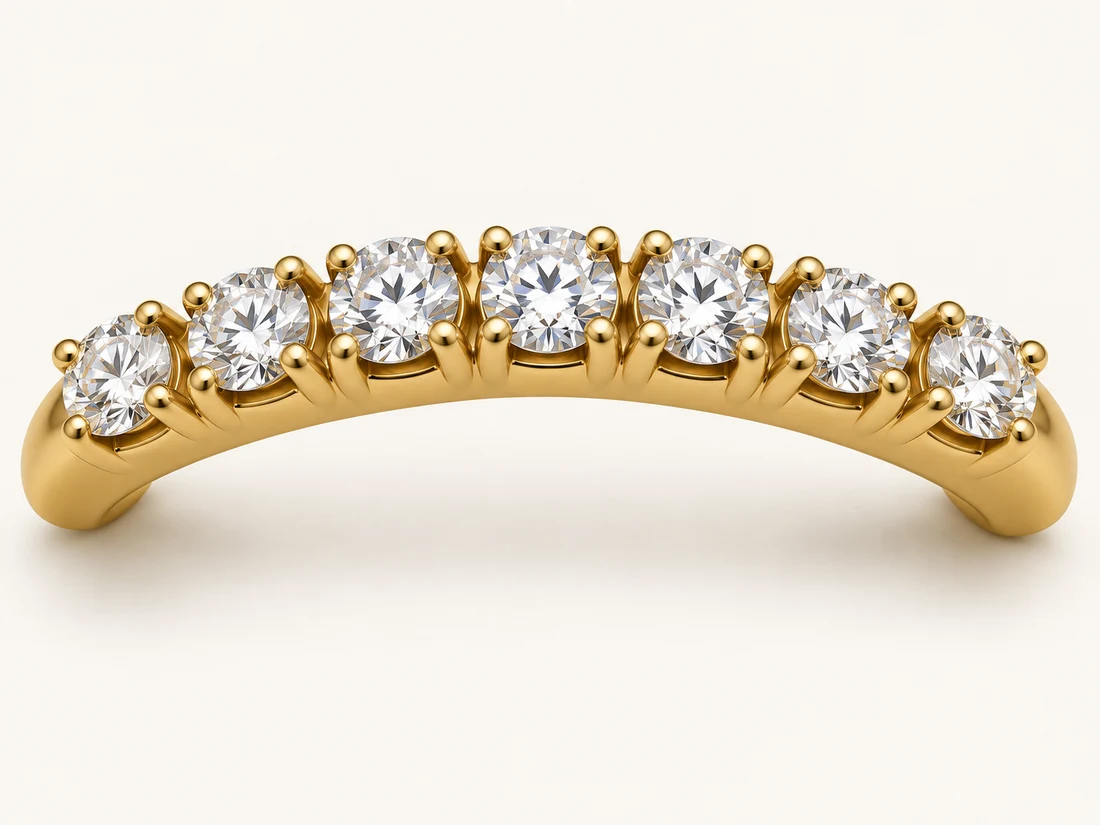
Surface prong / claw
Small metal claws around each diamond.
Consider: Shows much of the stone. Worn or lifted claws may catch on fabric and need checking.
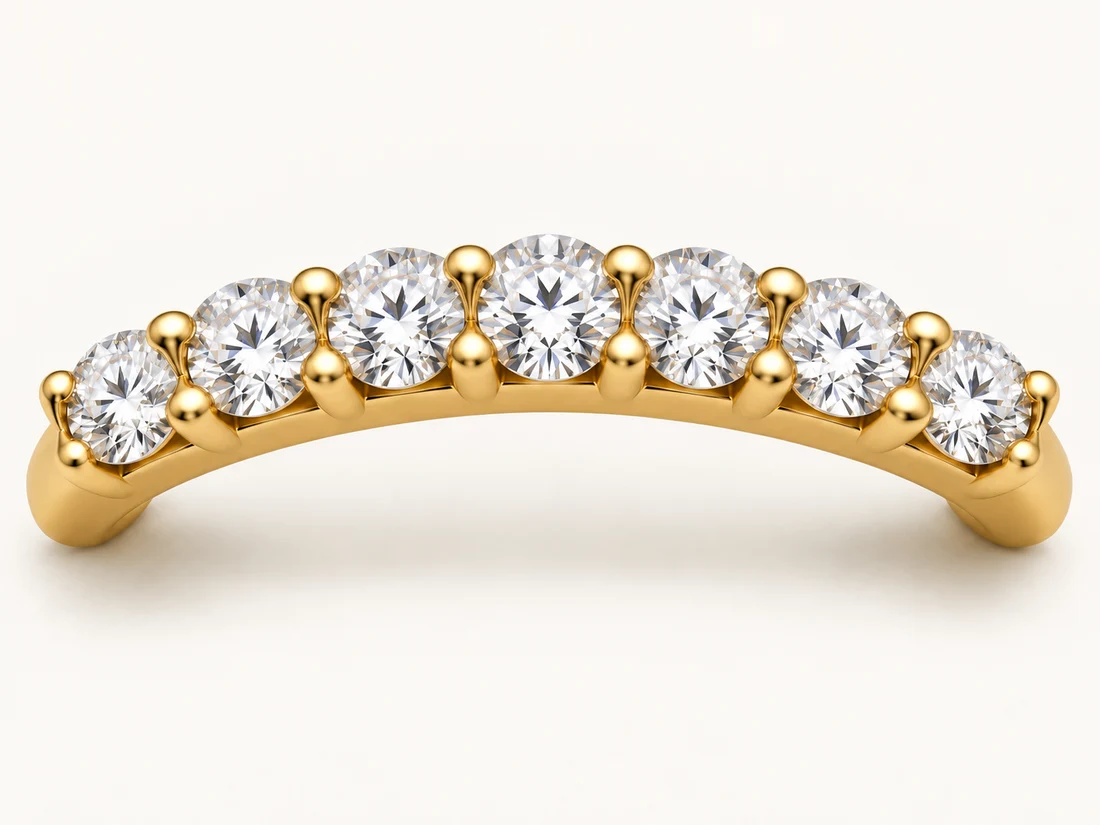
Shared prong
Neighbouring diamonds share claws.
Consider: A close line of sparkle with less visible metal. Keep shared claws in good condition.
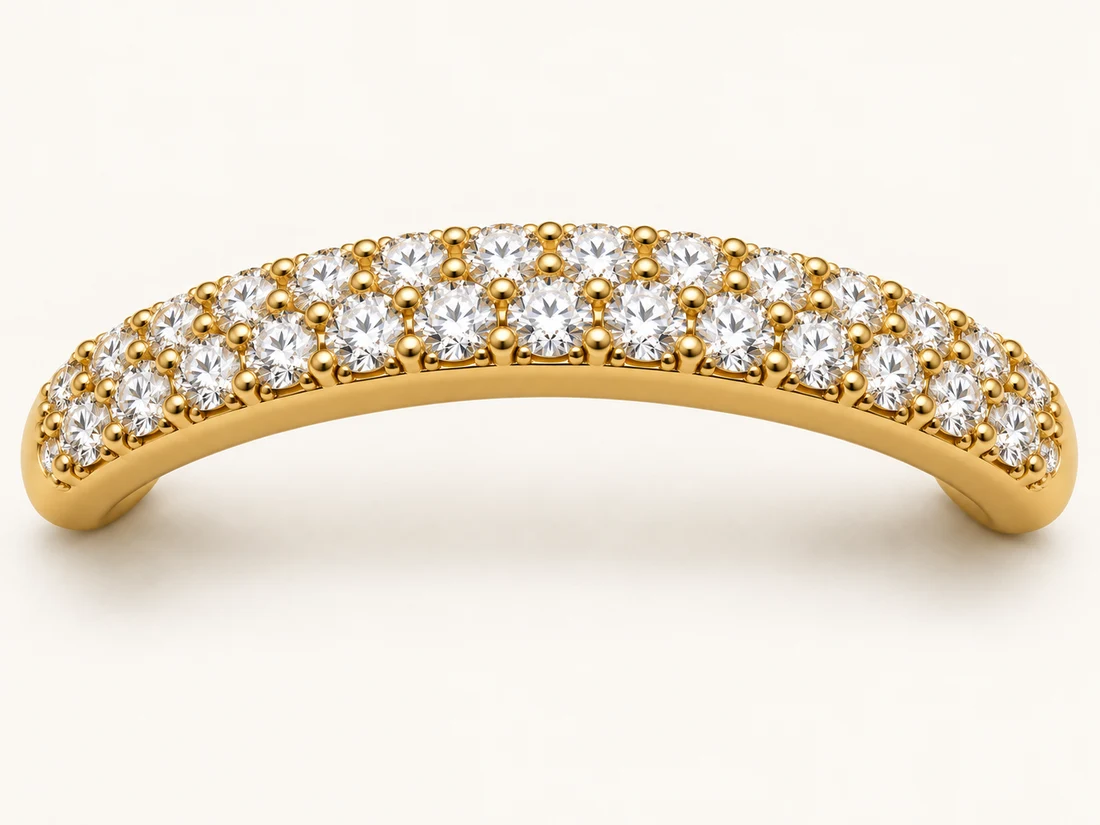
Pavé
Small diamonds set closely together for a sparkling surface.
Consider: Can be one row or several. Delicate small-stone settings need regular checks.
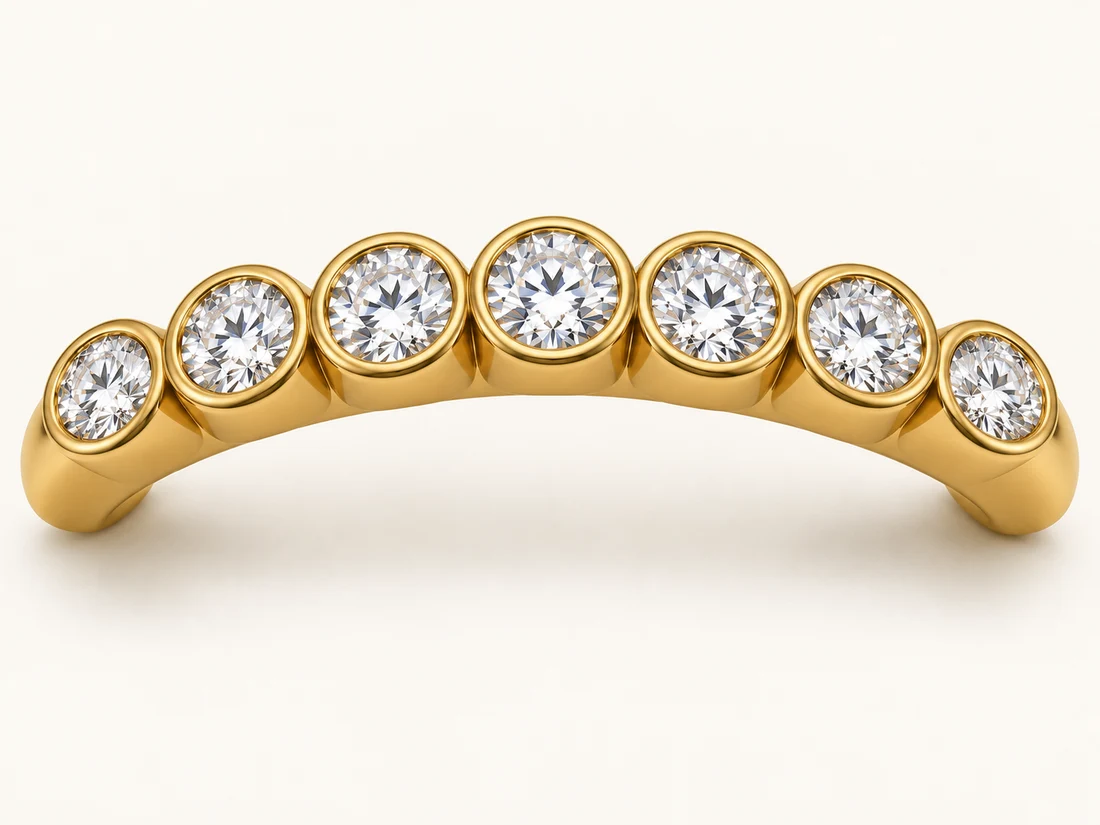
Bezel / rub-over
A metal rim around each stone.
Consider: A smooth outline with protection around the edges; more metal is visible.
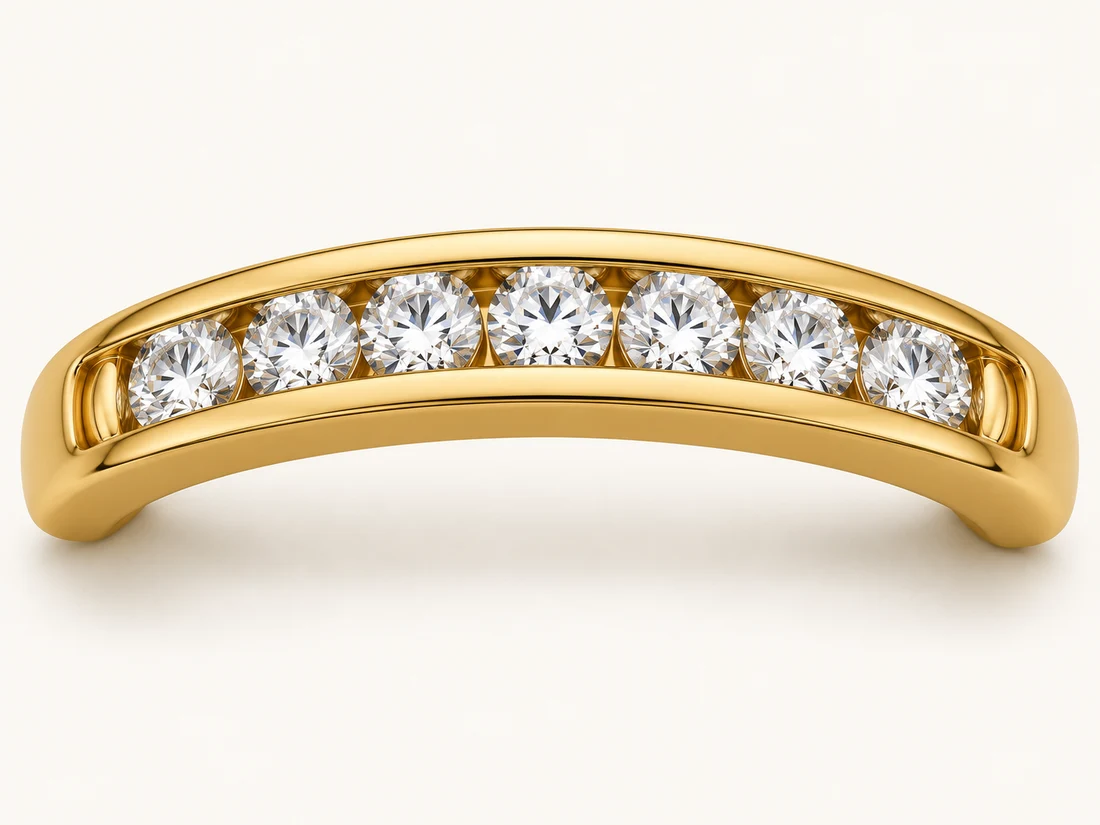
Channel
A row of diamonds between continuous metal sides.
Consider: A neat, framed look with no individual claws along the outside. Check how it sits beside another ring.
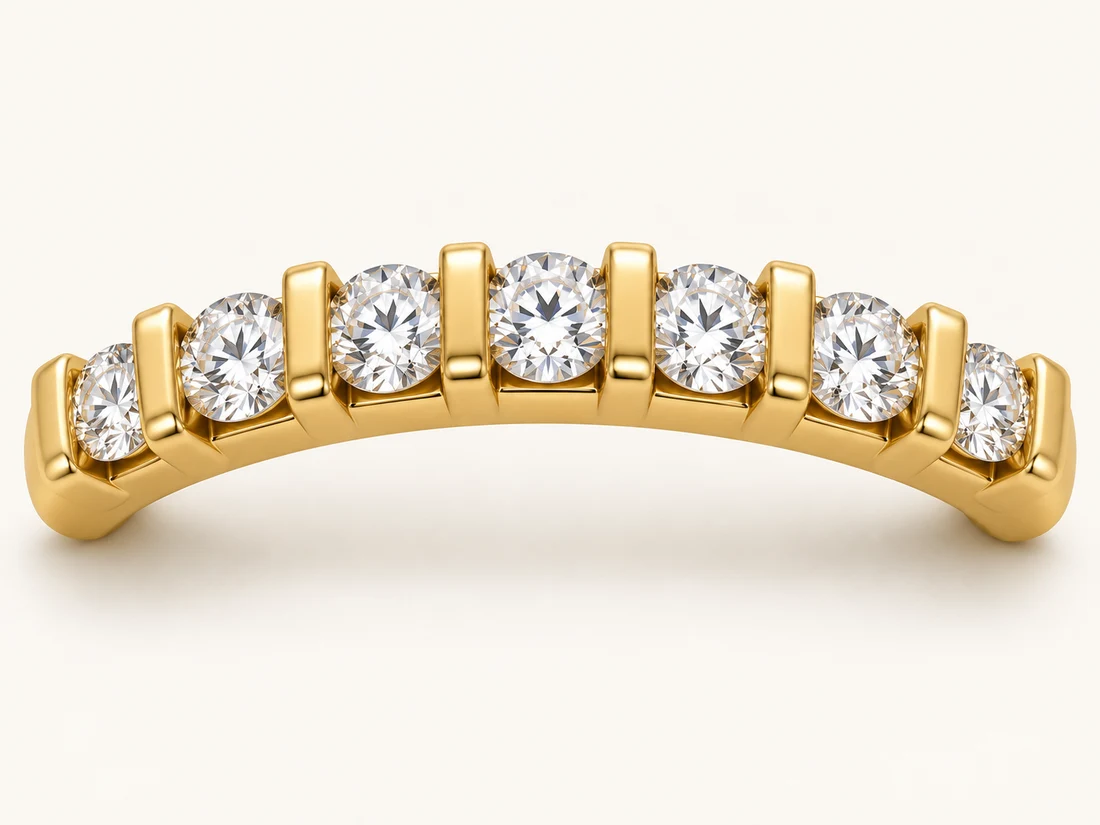
Bar set
Visible metal bars between or beside the stones.
Consider: A geometric look. Some stone edges remain exposed.
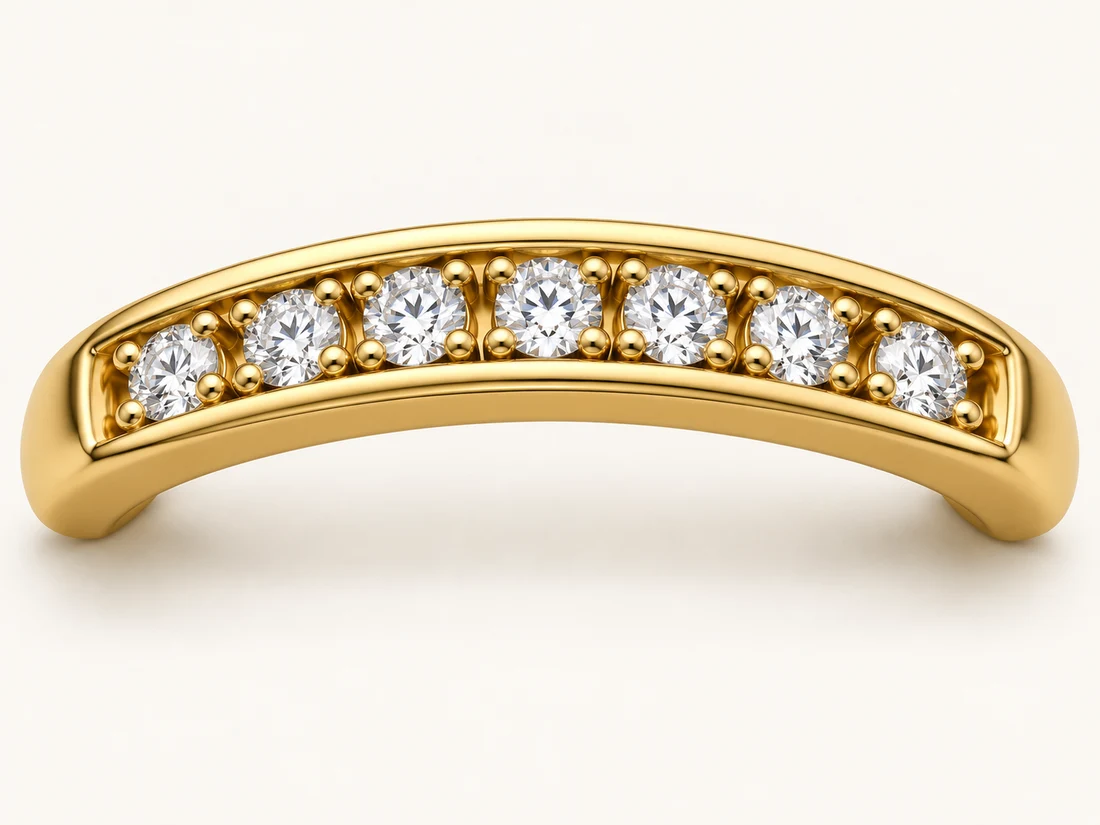
Bead bright
Small stones held with tiny metal beads inside a bright metal border.
Consider: A framed line of sparkle; the small retaining beads need inspection with wear.
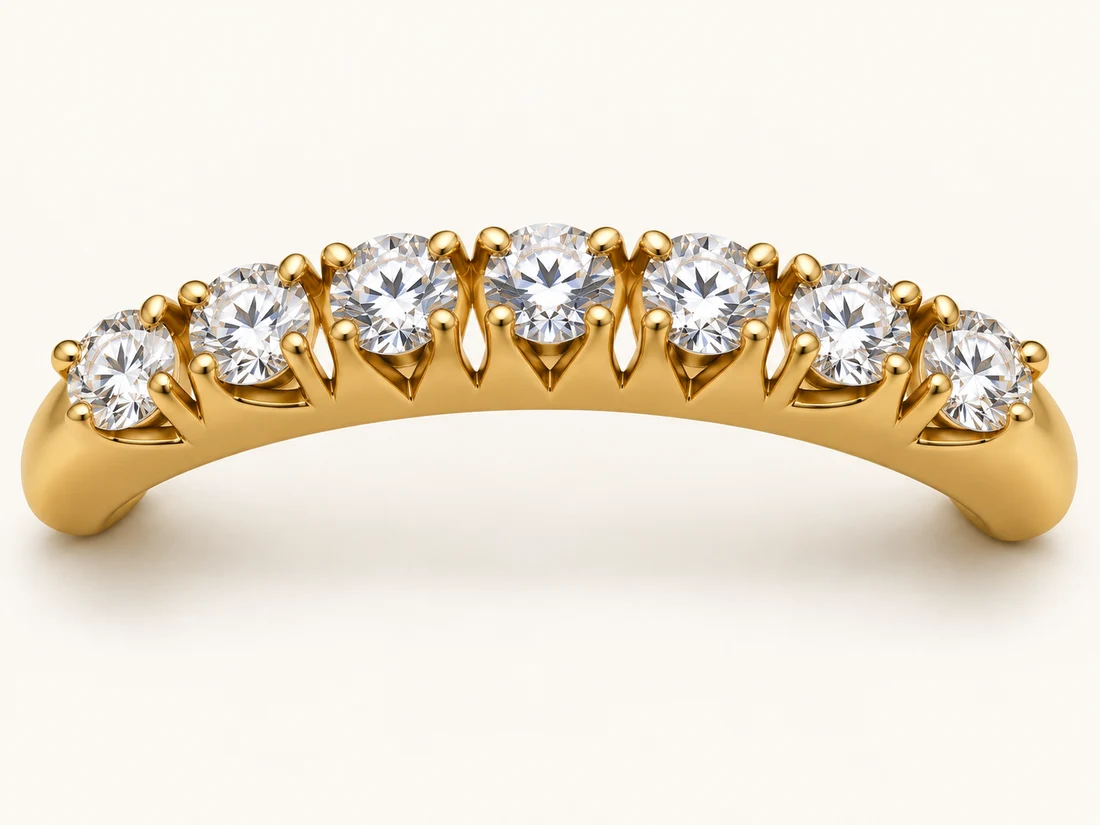
French V-split
V-shaped openings around the small-stone row.
Consider: A delicate, open look. Compare the actual ring: the name alone does not describe its height or strength.
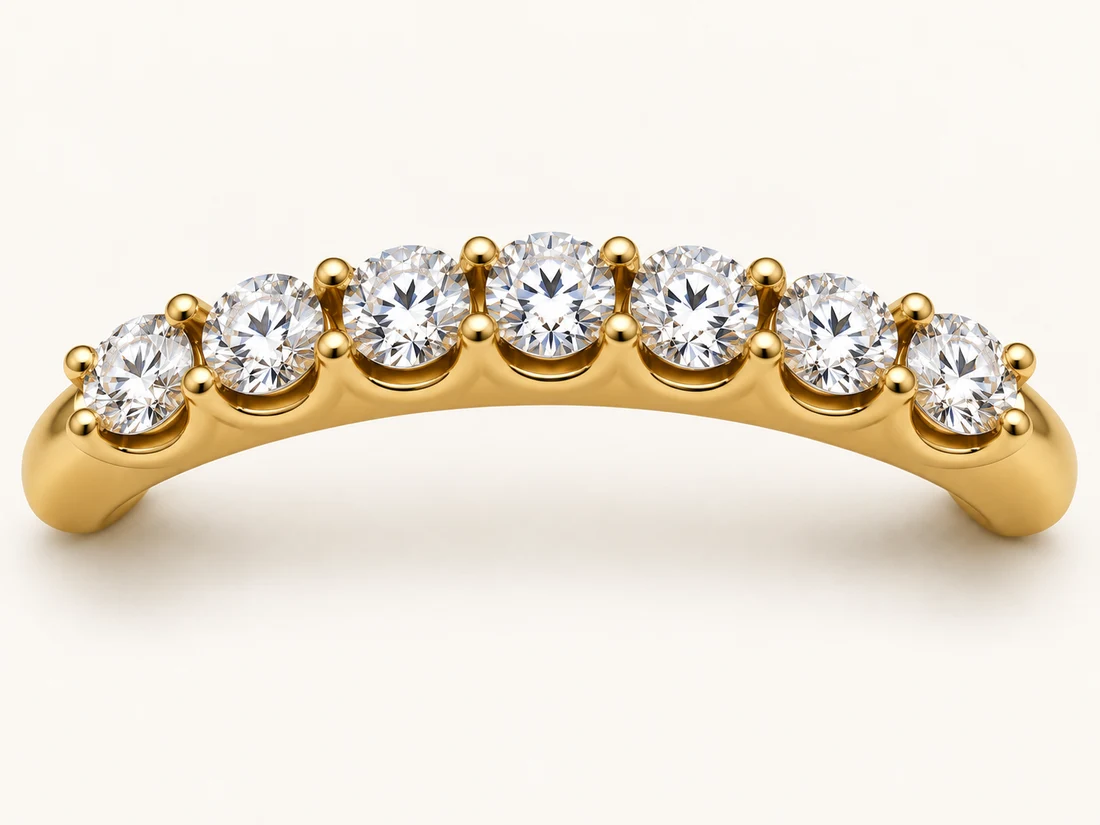
Scallop
Curved cut-outs around the row of diamonds.
Consider: A shaped edge that makes the individual stones stand out. Check comfort against neighbouring fingers.
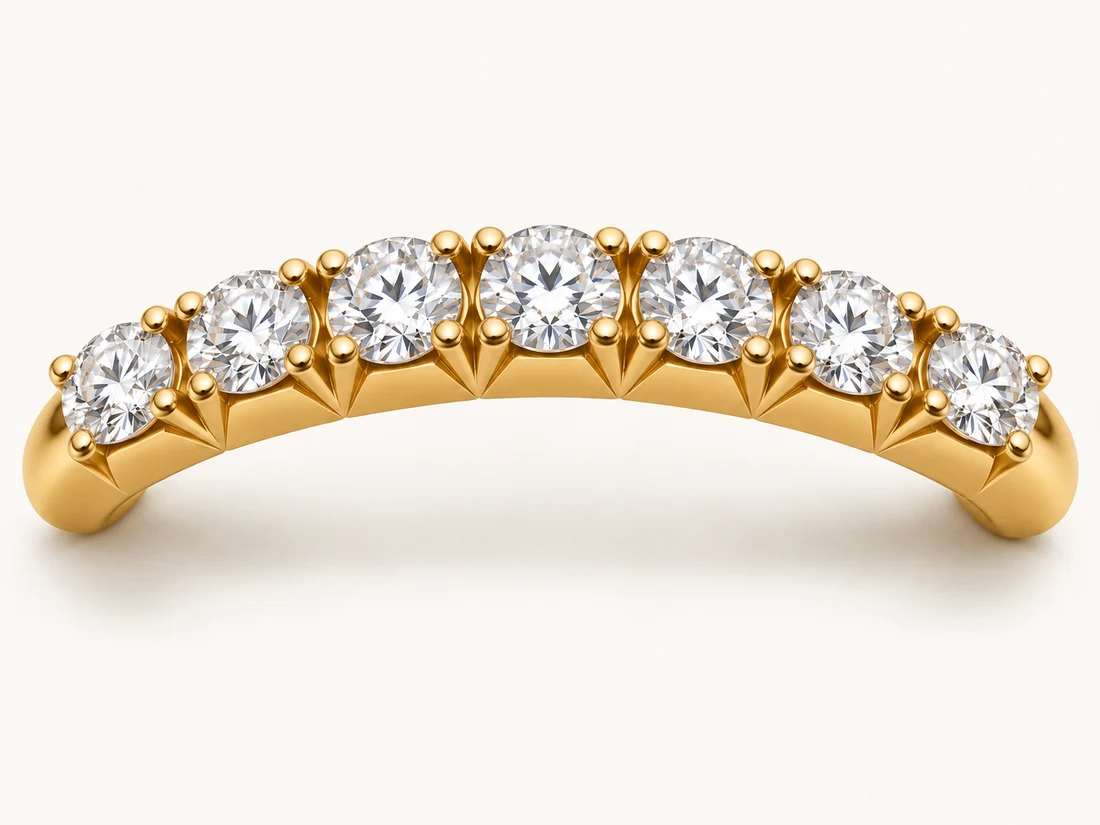
Fishtail
Notched metal details around the small stones.
Consider: A more patterned outline. Ask for a side view and check whether the edges feel comfortable.
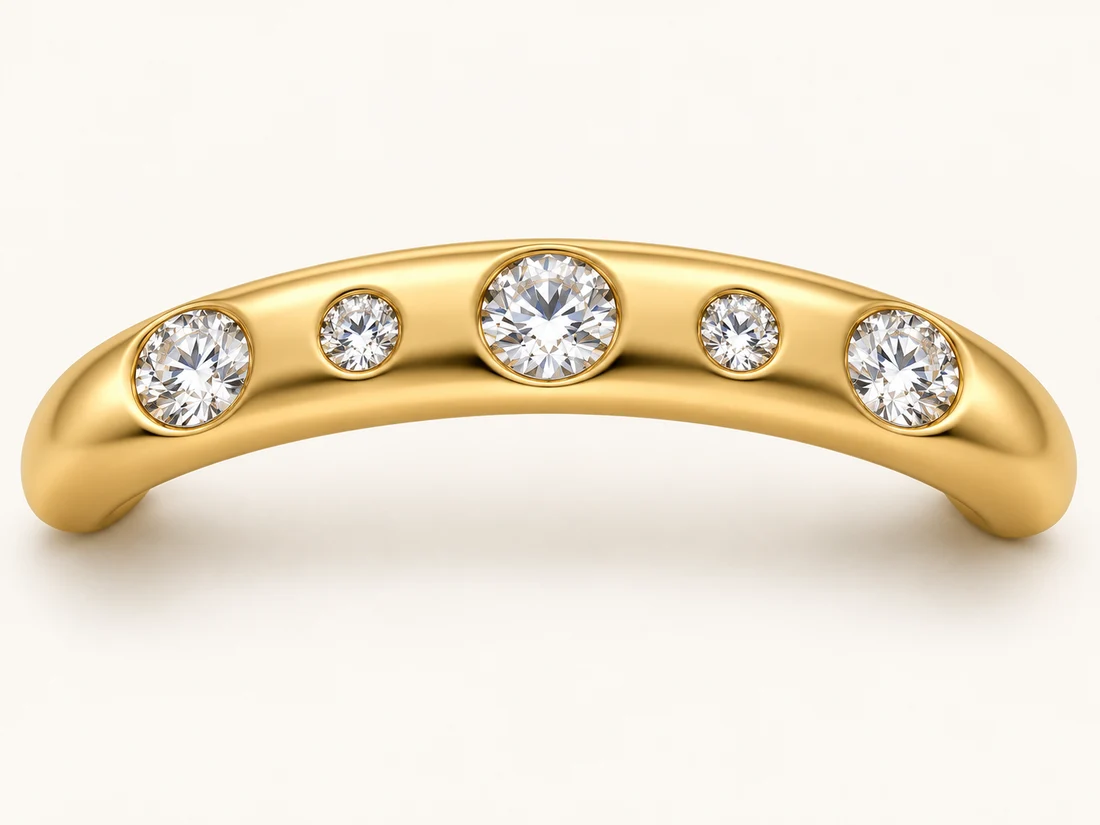
Flush
Diamonds sit low in the surface of the band.
Consider: A smooth, understated look with less of each stone exposed.
Choose for your day-to-day life
If your ring often touches clothing, gloves or equipment, compare lower settings and smooth edges. A bezel or flush setting can be worth considering. If you prefer the open look of claws or a fine pavé band, allow for sensible care and regular setting checks. Take valuable rings off for activities that could knock, crush or snag them.
The centre stone and the ring style
Solitaire, halo and three-stone describe the overall design, rather than a single way of holding a diamond. A solitaire can use claws or a bezel; a halo can surround a claw-set centre. For pointed diamonds such as pear and marquise, ask how the tips are protected. A V-prong is a claw shaped to cover a point; it is different from the V-shaped decorative openings shown above.
The setting name alone does not predict sparkle. Compare the actual diamond and finished design, including a side view. If you want to wear a wedding band alongside it, check whether the two rings sit together comfortably.
Before you order
- See the ring from the top, side and on a hand.
- Check its height, smoothness and fit beside another band.
- Ask about resizing limits, especially where stones run around the band.
- Ask how often the setting should be inspected. If a stone moves or a claw catches, stop wearing it until it has been checked.
Sources: GIA: settings and styles · GIA: protection against chipping · GIA: setting a pear with V-prongs · GIA: ring settings and prong styles · GIA: four-prong and six-prong settings