Gold Finishes: Choose the Look You Like
Compare shiny, soft and textured finishes, see how they wear, and choose a surface that suits your jewellery and daily life.
Reviewed by Adnan Ali, Graduate, GIA Diamond Grading · Updated 2026-10-18
A finish changes the surface of the metal: how shiny it looks and the texture you can see. It does not change the gold purity. The same yellow, white or rose gold can be polished, softly matt or strongly textured.
Compare the finishes
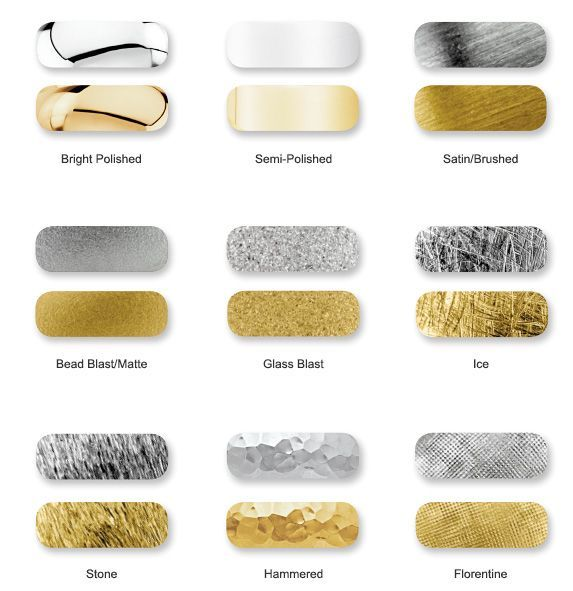
| Finish | The look | What it means for you |
|---|---|---|
| Bright polished | Smooth and mirror-like, with strong reflections. | A classic bright look. Fine scratches and fingerprints are easier to notice. |
| Semi-polished | A softer reflection than a bright mirror polish. | Useful if you want some shine without a highly reflective surface. Ask for a sample: the name covers different looks. |
| Satin / brushed | A soft sheen with fine lines across the surface. | A quieter look than mirror polish. Marks across the grain may stand out; the texture may need refreshing. |
| Bead blast / matt | An even, finely textured surface with little shine. | Good for a subdued look. Areas that rub can become smoother and shinier over time. |
| Glass blast | A more visibly grainy, sparkling texture in this reference. | Compare a close-up with bead blast before deciding: the names do not guarantee the same texture from every jeweller. |
| Ice | An irregular, criss-cross scratched pattern. | A bold texture. Check how strong it looks on the actual width of your ring. |
| Stone | A rougher-looking, directional texture. | A more noticeable pattern than fine brushing. Ask to see how it looks beside any polished edges. |
| Hammered | Small dents that break up reflections. | A varied, handmade-looking surface that can disguise some everyday marks. Raised areas still wear. |
| Florentine | Fine crossing lines that create a woven-looking pattern. | A detailed, softer-looking surface. Repeated polishing can soften the pattern. |
Which finish should you choose?
For a bright, traditional look, start with polished. For a quieter finish, compare semi-polished, satin and matt. For a more individual pattern, look at hammered, ice, stone or Florentine. There is no best finish for everyone: choose the one you enjoy on your hand.
Mixed finishes can give you both looks, such as a brushed centre with polished edges. A finish is separate from plating: rhodium, for example, is a surface coating that can change the visible colour.
What happens with everyday wear?
Every finish changes with use. Polished metal picks up fine marks; matt or textured high spots can become brighter where they rub. No finish is scratch-proof. A jeweller can often refresh it, but ask about the cost and whether engraving or delicate details could be affected.
Use cleaning advice suitable for the whole piece. Avoid abrasive polishing cloths on textured or plated areas unless your jeweller recommends them; they can change the finish.
Before you order
- See a sample or close-up in your chosen metal colour.
- Confirm which parts are polished and which are textured.
- Ask how the finish is refreshed and what it usually costs.
- Check availability for the design you want; a reference chart does not mean every finish is offered on every piece.
Sources: Jewellery Tools: satin, matt and brushed finishing methods · GIA: finishing and polishing benchmarks · GIA: white, yellow and rose gold