Diamond Certificates: Compare IGI, HRD and GIA
Learn what a diamond report tells you, how to compare laboratory names and grades, and what to check before paying more.
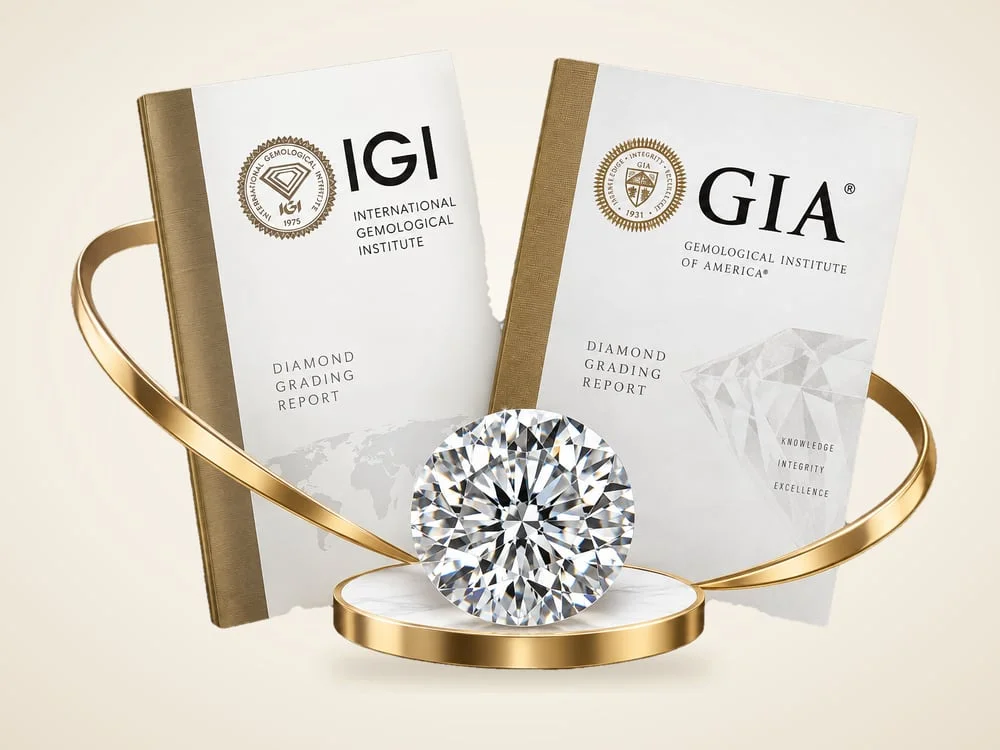
Reviewed by Adnan Ali, Graduate, GIA Diamond Grading · Updated 2026-10-18
A diamond certificate is usually a laboratory grading report. It helps you check the stone’s identity and characteristics. It is useful evidence for comparing diamonds, but it is not a valuation or a promise that the diamond will look beautiful.
IGI, HRD and GIA: what matters to you?
| Laboratory | What to look for | Buyer takeaway |
|---|---|---|
| IGI | Natural or lab-grown identity, individual colour and clarity grades, measurements and cut/finish details. Fancy-shape cut grading is also offered. | Commonly seen on lab-grown diamonds. Verify the number and compare the actual stone. |
| HRD Antwerp | Diamond identity, weight, colour, clarity and the proportions, polish and symmetry entries provided. | Read the report’s own scale and check which entries apply to that shape. |
| GIA | Natural-diamond colour and clarity grades; overall cut grading for eligible standard round brilliants, plus polish and symmetry. | A GIA fancy-shape report should not be assumed to carry an overall cut grade. Check the report type. |
Does one laboratory make a diamond worth more?
The report name can influence buyer confidence and the asking price. It does not change the diamond itself. There is no fixed percentage premium for every GIA, IGI or HRD stone, and no reliable rule that converts one laboratory’s grades into another’s by adding or subtracting a grade.
Before paying more, compare natural with natural or lab-grown with lab-grown, then match shape, weight, visible size, grades and actual appearance. Include the setting, aftercare and purchase terms in the comparison. If a seller says one report makes a stone better, ask what visible or measurable difference you are getting.
A useful difference for lab-grown reports
IGI lab-grown reports commonly show individual colour and clarity grades. GIA’s lab-grown service introduced on 1 October 2025 uses an overall Premium or Standard assessment; older reports can have another format. These labels are not direct replacements for one colour-and-clarity pair. Check the report date and service before comparing.
Your report checklist
- Confirm whether the diamond is natural or lab-grown.
- Verify the report number on the issuing laboratory’s own website.
- Match the shape, carat weight and measurements to the diamond being offered.
- Read the comments and any treatment disclosures.
- Ask to see the actual stone; the report does not show its full appearance in everyday light.
Sources: GIA: diamond reports and services · GIA: lab-grown assessment change · IGI: diamond cut grading methods · IGI: verify a report · HRD Antwerp: the 4Cs · HRD Antwerp: report verification