Choosing your metal
Compare gold, platinum and silver, including purity numbers, everyday wear and care.
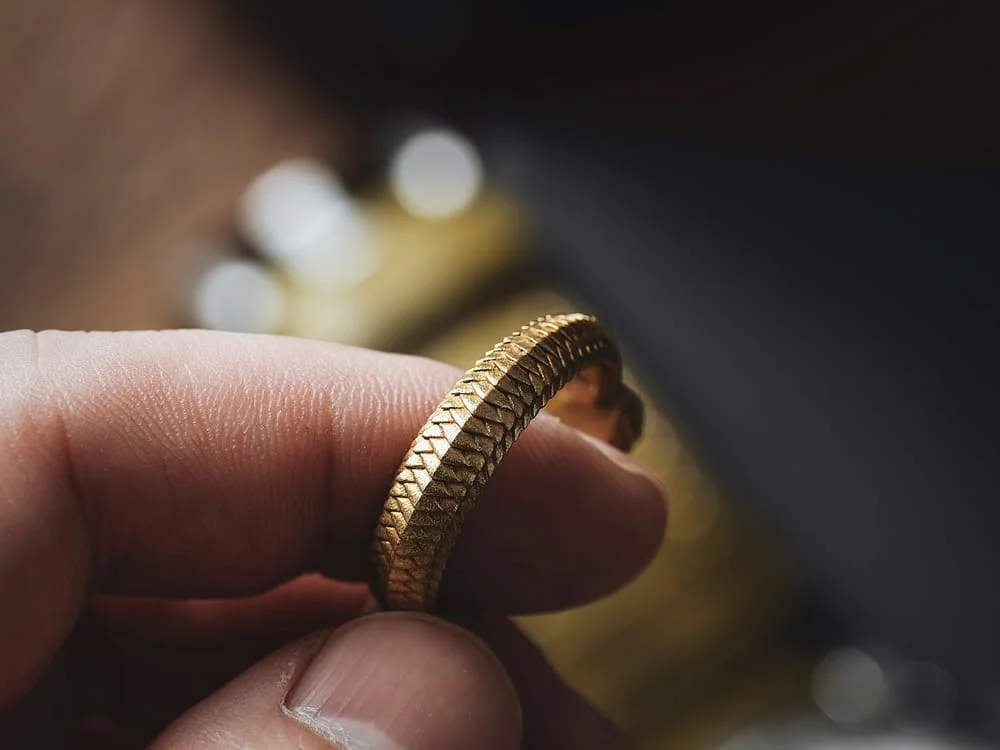
Choose what suits your style, budget and daily life. Gold purity is the proportion of pure gold in the alloy; higher K means more gold.
| Metal | Purity | Benefits | Considerations |
|---|---|---|---|
| 9K gold | 37.5% gold (375) | Usually the most affordable gold option. | More alloy metal; colour and hardness depend on the blend. |
| 10K gold | About 41.7% gold (417) | A little more gold than 9K. | Less gold than 14K or 18K; wear depends on the alloy. |
| 14K gold | 58.5% gold (585) | A balance of gold content, cost and everyday wear. | Hardness varies with the alloy and design. |
| 18K gold | 75% gold (750) | Higher gold content; often a richer yellow tone. | Usually costs more; can mark more easily than lower-K gold. |
| Platinum 950 | 95% platinum (950) | Naturally white with a substantial feel. | Heavier than gold; develops a surface patina with wear. |
| Sterling silver 925 | 92.5% silver (925) | A bright white tone at an accessible price. | Softer than many ring metals; can tarnish and need cleaning. |
A general comparison: available choices vary by design. Exact alloy blends and finishes vary; ask us if the composition matters to you.
Sources: GIA: gold colours · GIA: everyday wear · Assay Office: purity