Caring for Diamond Jewellery
Most of what shortens a piece's life is avoidable, and most of what dulls it washes off.
Reviewed by Adnan Ali, Graduate, GIA Diamond Grading · Updated 2026-10-18
A diamond is the hardest natural material there is, which makes it easy to assume jewellery looks after itself. What actually goes wrong is rarely the stone: it is the metal that holds it, and the film of soap and skin oil that dulls it long before anything breaks.
Cleaning at home
Warm water, a drop of washing-up liquid and a soft toothbrush will do almost everything. Let the piece soak for a few minutes, brush gently behind the stones where the film collects, rinse, and dry with a soft cloth. The underside of a setting is the part that matters — light enters a diamond from above but leaves through the pavilion, so a dirty underside is what makes a stone look flat.
- Avoid bleach and chlorine, which attack the alloys in gold
- Avoid abrasive pastes and powders; they scratch metal even when they do not touch the stone
- Ultrasonic cleaners are fine for most plain settings, but not for anything with a loose stone, and not for pearls or other soft or porous gems
When to take it off
Take rings off for the gym, for gardening, for heavy lifting, and for anything that involves knocking metal against metal. A knock that bends a claw is what loses a stone, and it does so weeks later, quietly. Take them off for swimming pools and hot tubs too, because of the chlorine, and put them somewhere fixed rather than a pocket.
Storing it
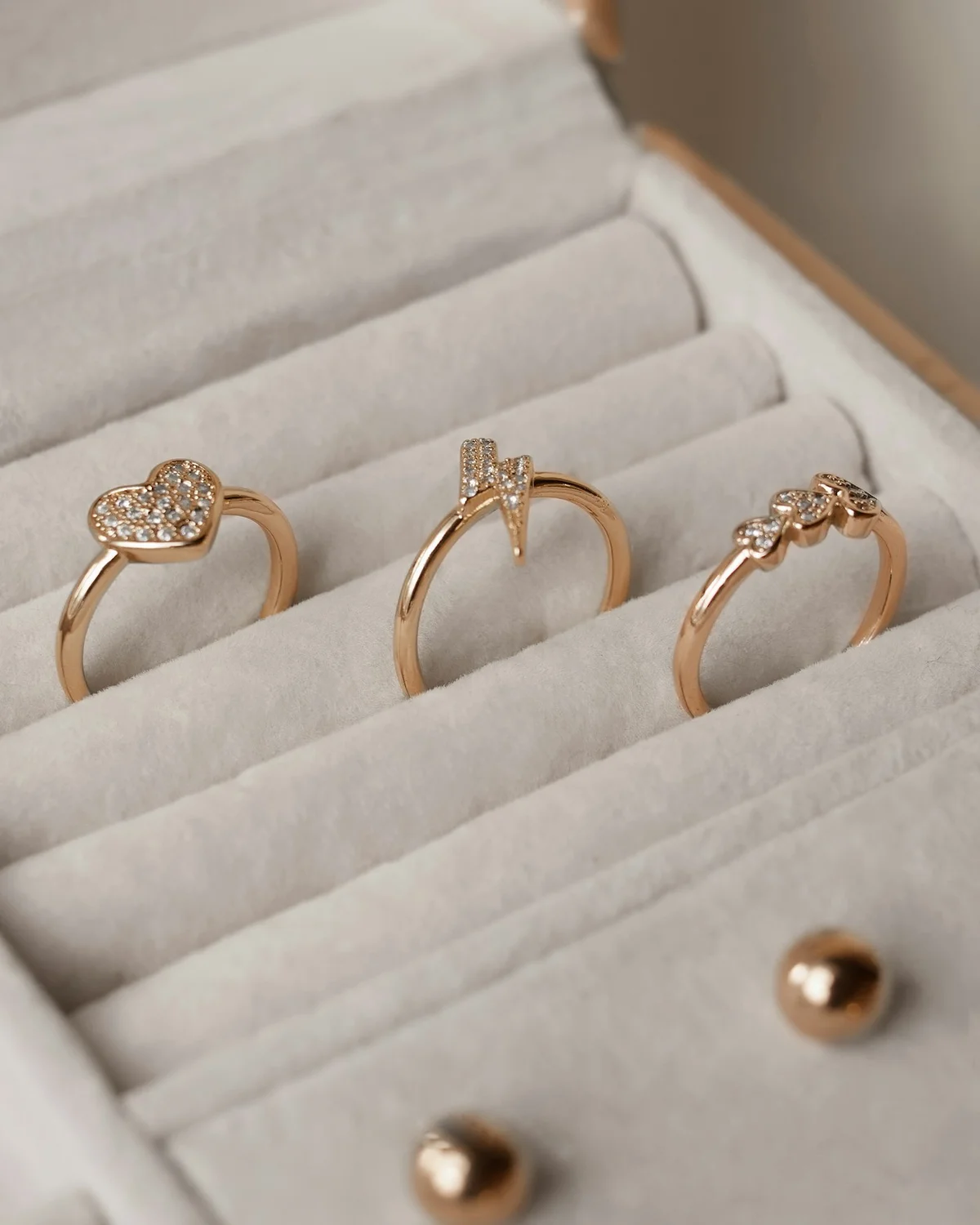
Separately, and not loose in a dish. Diamonds scratch gold, and they scratch other diamonds. A pouch or a lined box with individual slots is enough. Chains are best fastened before they go away, which is what stops them knotting.
Checking the setting
Once or twice a year, hold the piece close to your ear and tap it gently. A loose stone often rattles before it falls out. Look at the claws under a bright light: if one looks worn thin, flattened or snagged on fabric, have it checked before it fails.
What the warranty covers
Manufacturing defects, for life — a stone lost through a failed setting, a solder joint that gives way, a faulty clasp. It does not cover accidental damage, normal wear, loss, theft or work done by another jeweller. That last one matters more than it sounds: a repair by someone else makes it impossible to tell whose work failed, so if something needs doing, come to us first.